
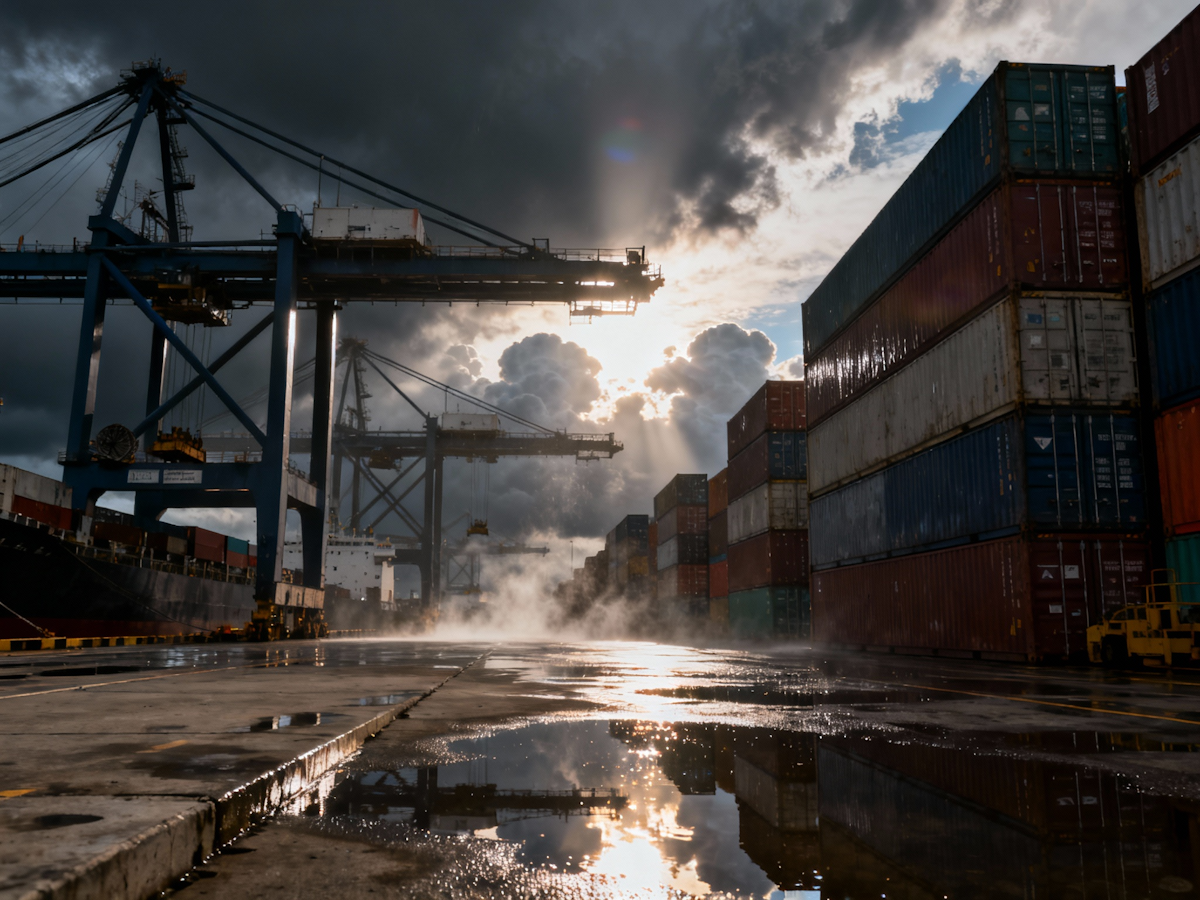

The shipbuilding industry is one of the most strategically significant sectors in the global economy, sitting at the crossroads of commerce, industry, and national defense. In recent years, the balance of power in global shipbuilding has shifted dramatically toward China, which has emerged as the undisputed leader in both production and new orders. The United States, by contrast, faces a steep decline in capacity, raising questions about its ability to sustain its economic competitiveness and maritime security. Against this backdrop, the United States has turned to tariffs and port fees as instruments of economic defense and strategic leverage. These measures are not only reshaping the U.S.-China trade relationship but also redefining the boundary between traditional economic policy tools and national security instruments such as sanctions.
China has maintained its lead in global shipbuilding for 15 consecutive years. In 2024, Chinese shipyards accounted for 55.7%of global completions, 74.1% of new orders, and 63.1% of order backlogs. Cost advantages in steel, labor, and supply chains have enabled Chinese yards to deliver vessels at a fraction of the cost of their U.S. counterparts. For example, a standard container ship built in China costs approximately $60 million, while a similar vessel produced in the United States costs over $330 million.
The difference in industrial capacity is equally significant. In 2023, China delivered 32.86 million gross tons of ships, while the United States produced just 60,000. It was reported that Chinese shipyards captured 71% of global new orders in 2024, compared with negligible volumes for the United States. This gap has alarmed U.S. policymakers, trade unions, and the defense establishment, prompting calls for stronger measures to counter China’s dominance.
In March 2024, five major U.S. labor unions, including the United Steelworkers, petitioned the Biden administration to investigate what they described as China’s “unreasonable and discriminatory” practices in shipbuilding and maritime logistics. The U.S. Trade Representative responded with a Section 301 investigation, which concluded in January 2025 that Chinese shipyards benefited from massive state subsidies, intellectual property violations, and suppressed labor costs. These findings set the stage for the Trump administration’s decision in April 2025 to impose new tariffs and port fees on Chinese-built and Chinese-operated vessels.
Strategic Rationale for U.S. Tariffs
The tariffs and port fees introduced in 2025 reflect a blend of economic, security, and geopolitical objectives.
Economically, the measures aim to revive the U.S. shipbuilding sector, which policymakers regard as essential to both trade competitiveness and industrial resilience. By increasing the costs of Chinese vessels operating in U.S. waters, it is expected to redirect demand toward domestically built ships. The tariffs are also projected to generate significant revenue — nearly $360 billion in 2026 alone — which could support domestic industry and infrastructure.
From a security perspective, the measures are intended to safeguard maritime supply chains and ensure that critical capabilities, such as naval shipbuilding, are not undermined by foreign dependence. The U.S. Navy’s 30-year shipbuilding plan and bipartisan legislation like the SHIPS for America Act underscore the degree to which maritime capacity is tied to national defense. By targeting Chinese-built and -operated vessels, the tariffs are also designed to limit Beijing’s influence in U.S. ports and reduce vulnerabilities in times of crisis.
Finally, the tariffs serve a geopolitical purpose. They provide Washington with a flexible tool of leverage, capable of applying pressure not only on China but also on third countries. The introduction of “secondary tariffs” on India in response to its imports of Russian oil highlights this broader use of tariffs as instruments of foreign policy rather than mere trade defense.
Economic vs. Security Tools: Tariffs and Sanctions
Traditionally, tariffs and sanctions have occupied distinct roles in U.S. policy. Tariffs are taxes on imports, designed primarily to protect domestic industries from foreign competition. They are reversible, can be applied selectively, and generate revenue for the U.S. Treasury. Sanctions, by contrast, are penalties imposed on foreign governments or entities to punish or deter behavior that violates international norms or threatens national security. They typically restrict trade, financial flows, or access to critical technologies and often require complex legal frameworks and international cooperation.
The distinction between the two measures lies in their underlying objectives: tariffs are primarily employed to safeguard economic competitiveness, whereas sanctions are intended to exert coercive pressure or impose punitive consequences. Yet under the Trump administration, this line has become increasingly blurred. Tariffs are being deployed in ways that go beyond economic protectionism, increasingly serving functions traditionally associated with sanctions.
The Bridge to Sanctions: Tariffs as Quasi-Sanctions
It is worth mentioning that the imposition of tariffs on India as well in August 2025 illustrates the emerging bridge between tariffs and sanctions. These “secondary tariffs” were not aimed at protecting U.S. industries but at penalizing India for importing Russian oil. In effect, the U.S. used tariffs to influence the foreign policy choices of a third country — a function more typical of secondary sanctions.
This shift represents a conceptual innovation in U.S. economic statecraft. Tariffs are now part of a broader “sanctions toolbox,” operating alongside financial and trade restrictions to achieve strategic objectives. Unlike traditional sanctions, tariffs allow the executive branch to act unilaterally and flexibly, without requiring congressional approval or international coordination. This makes them attractive for the U.S. government seeking rapid and visible leverage but also destabilizing for global trade governance.
Implications
The new U.S. tariff strategy carries wide-ranging implications. For the United States, it may deliver short-term leverage and industrial protection, but at the cost of higher consumer prices and reduced export competitiveness.
Most importantly, this evolution signals a shift in how the United States wields its economic power. The integration of tariffs and sanctions into a unified framework of geoeconomic coercion has been characterized by many as a development that is reshaping the conceptual and practical boundaries between trade and security policy.
Conclusion
To conclude, the U.S. response to China’s dominance in shipbuilding through tariffs and port fees highlights the convergence of economic defense and national security. While tariffs and sanctions have historically served distinct functions, their roles are now overlapping. Under the Trump administration, tariffs are increasingly being used as sanctions-like instruments to pressure not just adversaries but also third countries. Taken together, this development marks a profound change in U.S. geoeconomic policy, with lasting implications for the intersection of trade, security, and international strategy.